The night the river lights up: Dev Deepawali in Varanasi
On the Kartik full moon, Varanasi lines its ghats with lamps. A boat on the Ganga at dusk, a walk up the steps, and a stamp you collect by being there.

Chapter 1: Fifteen days after Diwali
Diwali in Varanasi comes and goes the way it does everywhere: sweets, cousins, late nights. Then, on the full moon of Kartik, the city lights its lamps a second time, and this time they are for the river.
This is Dev Deepawali. Wikipedia describes it as the night the gods are believed to come down to bathe in the Ganga. From Ravidas Ghat at the southern end to Rajghat, the steps are lined with more than a million earthen lamps.
It is the same full moon that Pune keeps as Tripurari Pournima, the night Shiva defeated the demon Tripurasura and his three cities. Pune lights its temple towers. Varanasi lights a river.
In 2026 that full moon falls on Tuesday, 24 November. Incredible India, the Ministry of Tourism's site, and Drik Panchang both give that date for Dev Deepawali in Varanasi.
Chapter 2: From the water at dusk
Start at Dashashwamedh Ghat, close to the Vishwanath Temple and the most popular of the city's 84 ghats. Boats of every size wait at the water. Get on one as the light starts to go.
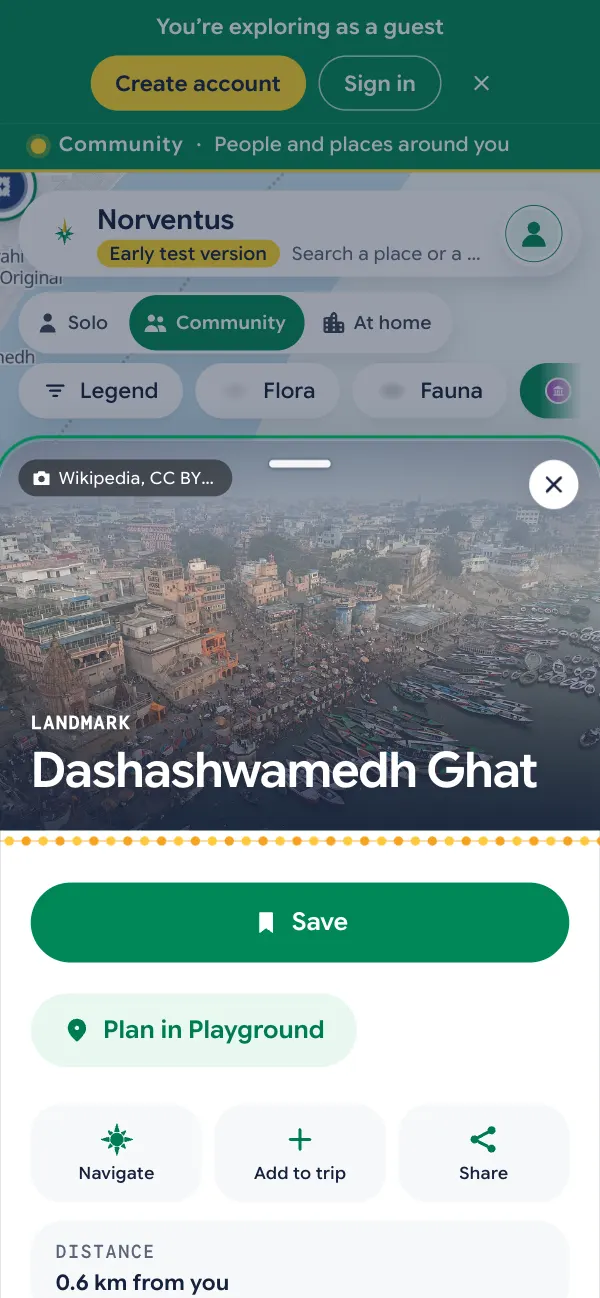
Every evening at dusk, Dashashwamedh holds its Ganga aarti. Priests lift lamps and move them up and down to the rhythm of the bhajans, for about 45 minutes. On Dev Deepawali you watch it from the water, with the steps behind the priests filling with small flames.
Then the boat drifts, and ghat after ghat lights up, step by step, until the whole bend of the river is drawn in lamps and doubled in the water. The boats around you go quiet. A child starts counting ghats and gives up.
The whole bend of the river, drawn in lamps and doubled in the water.
Upstream, the boat may pass Manikarnika Ghat, the city's principal cremation ground, where cremations go on every day of the year. For the families there, it is a night of grief. Keep your voice low and your camera down, as Wikivoyage asks, and let the boat move on.
Chapter 3: Walking the steps
Back on land, walk a short stretch of the ghats, slowly, minding the lamps at your feet. Nearly 100,000 pilgrims come to the riverfront on this night, and Wikivoyage suggests the boat over the ghats if you are not with someone local. A short walk with your own people is plenty.
The ghat with the story
Dashashwamedh is named for a legend: Brahma is said to have performed ten horse sacrifices here. The present ghat dates to about 1735 and the Peshwas, whose seat was Shaniwar Wada in Pune. Two full moons, two cities, one thread between them. And it is where tonight began: the lamp-lighting of Dev Deepawali was first started here in 1991 by Pandit Kishori Raman Dubey, known as Babu Maharaj.
Food on the way
Varanasi feeds you on foot. Kachori with sabzi on Dashashwamedh Road, aloo tikki chaat, chai in the lanes behind the ghat, a lassi with malai and rabri on top. Finish with a Banarasi paan, eaten whole, the way Wikivoyage tells you to.
Chapter 4: Collect it in person
Norventus has a stamp for Dashashwamedh Ghat. The stamp only comes to people who are there: open the app on the steps, within 80 m, with location on, and it lands in your passport with the date. Your position stays on your phone.
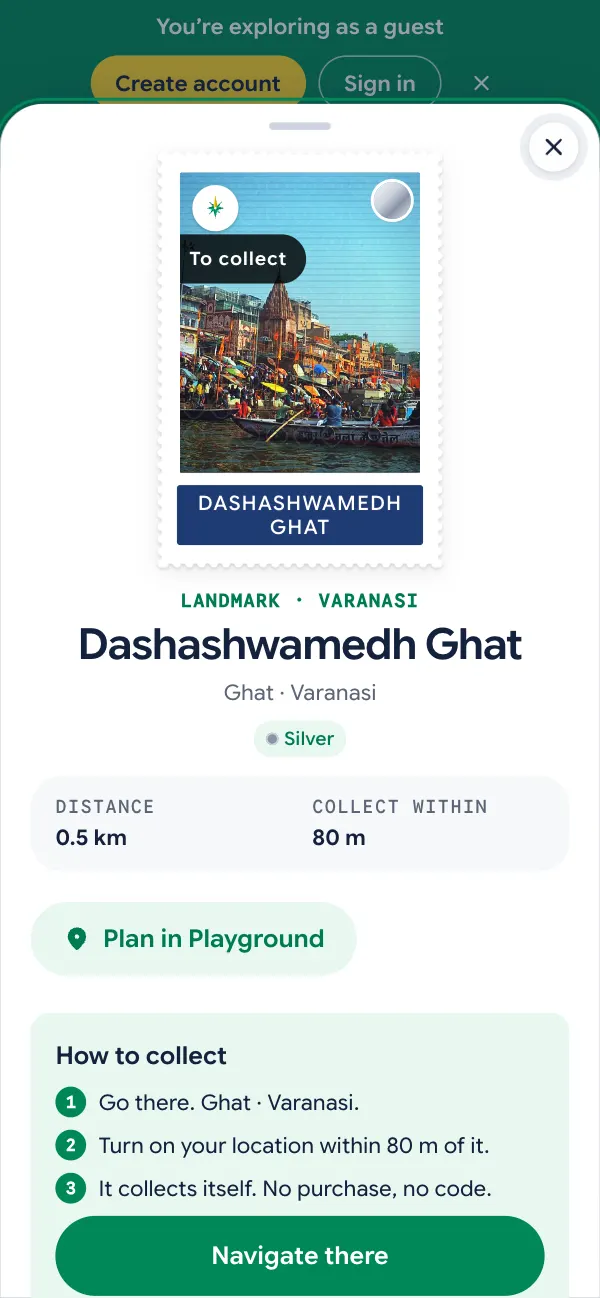
Varanasi has 66 stamps in the Norventus catalog (as of 18 November 2026). For a quieter evening, walk south to Assi Ghat, the southernmost, and Tulsi Ghat, where the poet Tulsidas wrote the Ramcharitmanas. Across the water stands Ramnagar Fort, built in 1750, for a daytime crossing.
One boat, one river, one night of lamps.
Going as a group? Plan it in Playground the week before: Dashashwamedh, your boat and one meeting point on a single map, so everyone knows where to find each other when the steps fill up.
Before you go
- Check the date. Dev Deepawali follows the lunar calendar. Confirm this year's date and events with Uttar Pradesh Tourism or a local panchang nearer the day.
- The river and the ghats get very busy. Agree on a meeting point before you set out, and follow the directions of the police and boat crews.
- Respect the ghats. Shoes come off near shrines, many temples are open only to Hindus, and Manikarnika is no place for photographs.
- Check the weather on the India Meteorological Department forecast for Varanasi, and carry a layer for the river.
Take the boat at dusk, walk the steps after, and collect the night.


